Bramberwick Museum of Local History & Curious Objects
Every town keeps things. Bramberwick has made an institution of it.
The museum preserves the objects, records, and recollections that help explain how people have lived here. Its collections include household possessions, photographs, correspondence, tools, and items whose original purpose remains a matter of discussion.
Some visitors come looking for their family’s history. Others come to find out whether anyone has seen something like the object currently sitting in their kitchen.
Both are reasonable starting points.
A history of everyday life
Much of Bramberwick’s history survives in ordinary things.
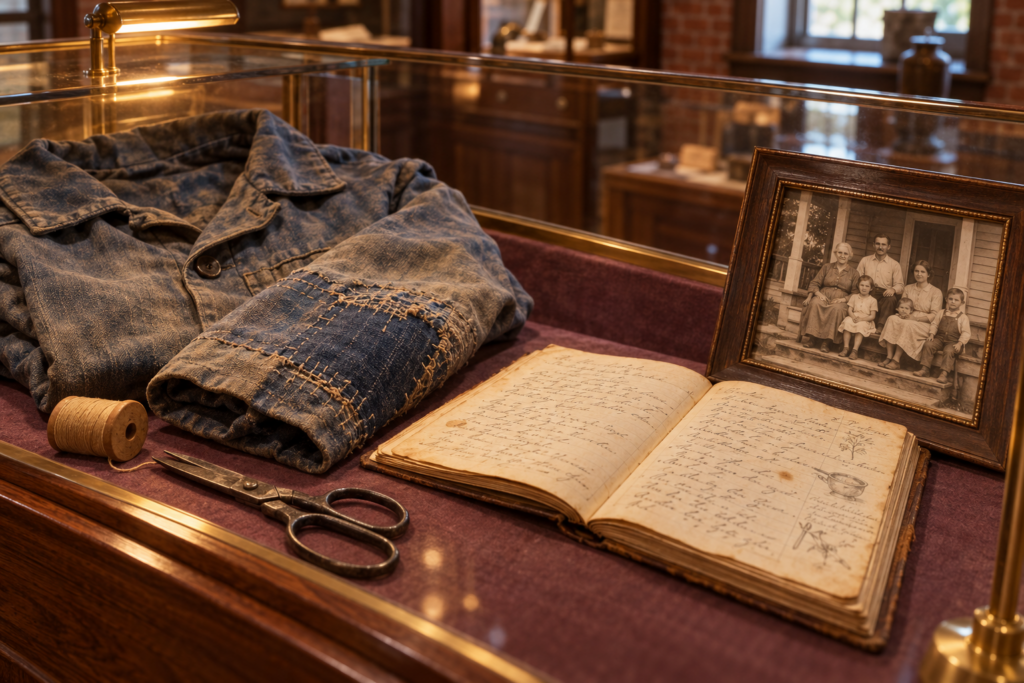
A repaired sleeve can reveal how someone worked. An annotated recipe can show what a family could afford, what they substituted, and which relative was trusted near the stove. Photographs preserve familiar faces alongside buildings that no longer look quite the same.
The museum collects these details because official records rarely tell the whole story. A date may establish when something happened. A possession can suggest what it meant to the person who was there.
An object does not need to be enchanted to deserve a place here.
The curious objects
Other parts of the collection require more careful handling.
Some objects arrive with detailed accounts of their origins. Others have passed through so many hands that their stories contradict one another. Occasionally, an item does something that none of its previous owners thought to mention.
The museum records what is known, distinguishes it from what is suspected, and leaves room for further investigation.
Display labels should be read in full. Handling instructions are part of the exhibit.
A closed cabinet does not necessarily contain something dangerous. It does mean that someone has decided it should remain closed.
Miriam Vale, archivist
Miriam Vale approaches the collection with patience, precision, and little enthusiasm for unsupported conclusions.
She helps preserve records, investigates the histories attached to objects, and answers questions from residents whose memories do not always agree with the paperwork.
Visitors should bring whatever details they have: names, dates, photographs, or an honest account of what happened. Uncertainty is useful information when it is acknowledged.
Miriam would generally prefer “I don’t know” to an explanation invented for the occasion.
Looking, asking, and donating
Visitors are welcome to take their time, read the labels, and ask questions. Some materials need staff assistance before they can be examined, and preservation or privacy may limit what can be shared.
Please ask before touching an exhibit or photographing personal correspondence.
Anyone considering a donation should speak with museum staff before bringing the object inside. Include what you know about its ownership, its behavior, and any instructions that have accompanied it.
If it makes a sound, changes positions, or responds when addressed, mention that at the beginning of the conversation.
Please do not leave donations at the door.
Museum Notes
The Chronicle’s Museum Notes follows discoveries, collection research, and the questions that remain after an object has been catalogued.
Some entries concern small possessions with deeply personal histories. Others begin with an unexplained arrival.