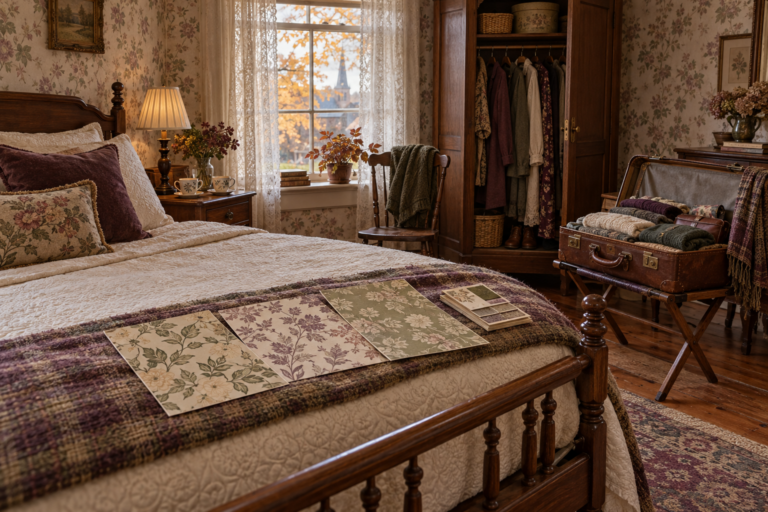
The first blanket brought out for winter often comes with a small discovery: a loose seam, a missing corner of its label, or the knowledge that someone put it away last spring without washing it.
Across Bramberwick, cupboards are being opened and familiar arrangements reconsidered. Residents are finding coats, checking spare rooms, and asking who has the ladder that was supposed to come back in September.
There is still time to attend to the small things before colder days make them inconvenient.
There is also time to ask what help a neighbor actually wants.
A useful offer
An offer to carry something, collect an order, or make a short trip across town can be easier to accept than a general instruction to ask if anything is needed.
It gives the person being asked something definite to consider.
It also gives them a chance to decline without having to explain their entire household.
A neighbor may welcome help moving a heavy box and have no wish to discuss its contents. Someone who has managed perfectly well for years may nevertheless appreciate not having to fetch a parcel in the rain.
Neither situation requires a committee.
Residents making arrangements to check on one another should agree on what those arrangements mean. A usual visiting time, a preferred way to make contact, and an understanding of when someone expects to be away are more useful than assumptions made from across the street.
A closed curtain is not, by itself, a request for intervention.
In Bramberwick, it may be a request for a longer curtain.
Different households, different winters
For many residents, winter preparation means bringing out warmer clothes and making the rooms they use most comfortable.
For others, the difficulty is finding somewhere that will remain cool, quiet, and undisturbed.
Some households become busier in the darker months. Others receive fewer visitors. A resident who is sociable through the summer may have very little interest in being invited anywhere by December.
Ask before trying to improve this.
An unused room may be serving its purpose precisely because nobody enters it. A window left uncovered may have been left that way deliberately. The person declining a blanket may already be too warm.
These are matters on which the occupant is usually better informed than the helpful visitor.
Where a household needs a particular arrangement, it is worth discussing it with anyone who will be delivering, visiting, or carrying out work. Instructions given before someone arrives are less awkward than explanations offered after they have opened the wrong door.
The small repairs
A sticking latch or worn bag strap can become part of ordinary life for so long that its owner stops noticing the effort involved.
Then the weather changes, and the latch must be managed with cold hands.
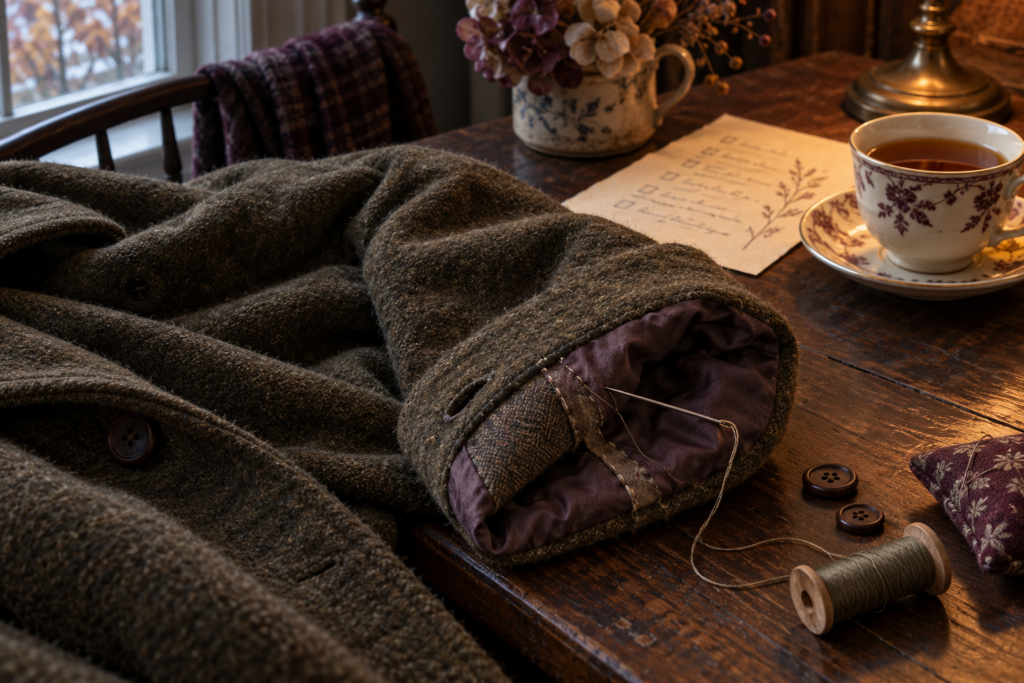
The Hall’s regular mending and small repairs evenings offer a place to bring manageable jobs and ask what can be done. Larger work should be arranged directly with someone able to assess it.
Describe the problem clearly, including any enchantments or unusual behavior.
“It only does that in winter” is worth mentioning at the beginning. So is “the previous repair is still binding.”
A repairer cannot be expected to identify every old working by looking at the paint. Owners who have notes from earlier work should have them available, even when the notes are embarrassing.
Particularly then, perhaps.
Homes standing empty
Residents leaving town for part of the season should make any necessary arrangements with someone they trust.
That includes agreeing on access. Possession of a key does not always settle the matter, especially where a house has been given instructions of its own.
If a neighbor will be calling in, make sure the household recognizes the arrangement.
Please also leave clear information about anything that must remain undisturbed. A covered object is not necessarily being protected from dust.
Those asked to look after a property should be equally clear about what they have agreed to do. Checking the sitting room once a week need not quietly expand into tending an unfamiliar conservatory.
It is easier to settle that distinction while the owner is still in town.
Saturday’s cupboard check
At Founders’ Hall on Saturday, November 14th, from 10 a.m. to noon, volunteers will be checking the shared blankets, linens, and stored supplies.
Worn items will be set aside for repair, and anything needing replacement will be recorded.
The session is intended to establish what the Hall already has. Residents are asked to wait for the resulting list before bringing donations.
There may be a need for particular things. There may also be a cupboard containing enough of something to last through several generations of committee membership.
Volunteers are welcome, including those who would prefer seated sorting or recording tasks. Ask at reception about the work available.
Before it becomes urgent
Winter preparations seldom look especially interesting from the outside.
A cupboard closes properly. A bag can be carried again. Someone knows when a neighbor is coming home and which room they have agreed not to enter.
The benefit appears later, on an afternoon when an ordinary task would otherwise have become difficult.
If there is a small job you have been putting off, this is a reasonable week to begin it.
And if you have the ladder, its owner would like to finish before the daylight goes.